
Hannie chocolate artisan
Direct source bean to bar made at origin crafted natural chocolate. Explore our exceptional range of best artisan chocolate bars from bean to bar, single origin of cocoa grown on the foothills of the snowcapped mountain of the moon Mt Rwenzori which has fertile soils, along the Equator in Queen Elizabeth national park where lake Goerge and lake Edward with Salt Lake are found. The conducive climate makes Hannie chocolate the best chocolate in Africa .
Taste the magic of our chocolate and discover what you have been missing on the planet.
Artisan or “craft” chocolate is a movement to produce, enjoy, and appreciate high-quality chocolate. Rather than wolfing down a mass-produced bar, chocolate should be an artisanal food – like wine, cheese, and coffee – whose enjoyment can be enhanced with greater education, connoisseurship, and sensory exploration. We seek to highlight the unique characteristics that result from the diversity of cocoa bean origins, cultivars, terroir, processing methods, roasting techniques, and other variables in chocolate preparation.
Artisan chocolate disrupts the more commodity-focused trade of mass-produced chocolates, and prioritizes taste, quality, unique flavor notes, and equitable relationships instead of low prices and standardized flavor. Fine chocolate is more like fine wine and specialty. We use cocoa beans from our own farmers.
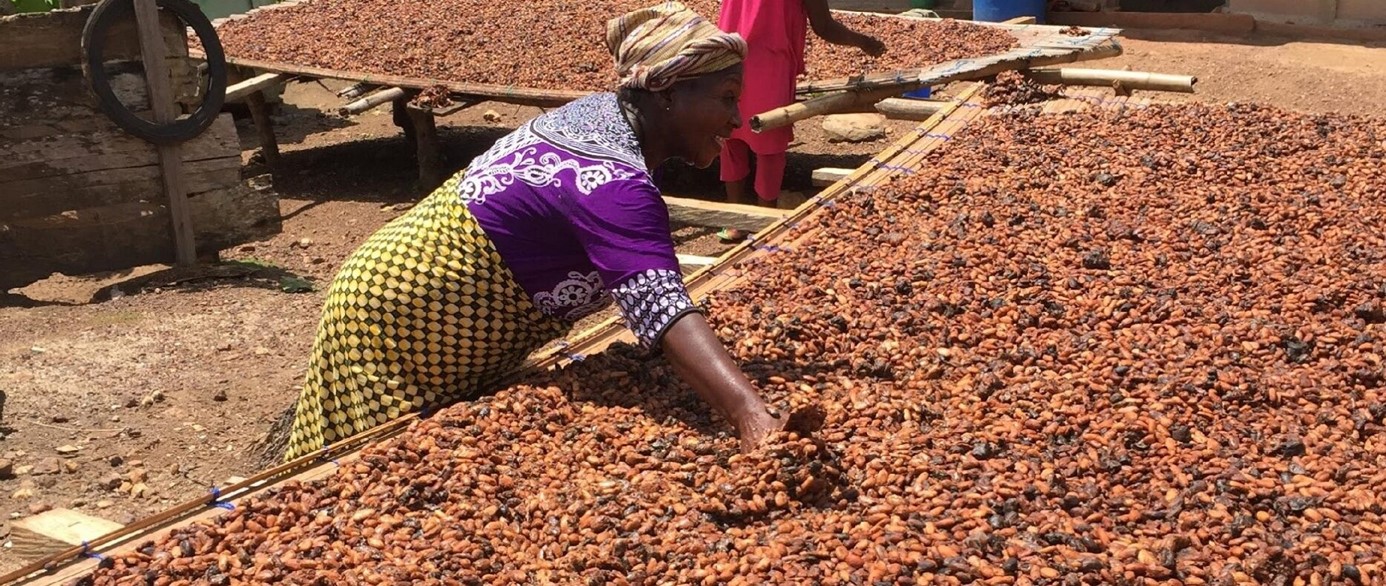
We use only fine flavor, free trade cocoa beans from the best growing farmers that we train ourselves. These premium cocoa beans are very different from the commodity beans used in mass produced chocolates. You will taste the difference right away. Each bean is hand-sorted to ensure only the best ones are used in our chocolate. We then gently roast the beans to bring out their unique flavor notes. Retain natural flavours through purposeful fermentations and, and dry our cocoa beans using sun as you know were are along equator
DIFFERENCE STARTS IN THE FIELD
Our chocolate has a high cocoa content and is produced with superior quality, from the planting of the fruit, it is made from well selected farmers who practice better farming method that make our chocolate the best because of selection of fine premium cocoa beans, produced with controlled fermentation and well dried. The result of this process is a much healthier chocolate, rich in natural flavor and aroma.
Our cocoa beans being grown from the snowcapped mountain Rwenzroi,which is rich in organic fertile soils result into good aroma and flavour of the Hannie chocolate
Sustainability approach
Sustainability is a top priority for Hannie chocolate, and we work actively to foster sustainable development. Our long-term success depends on an intact and well-functioning environment; we know what it means to think in terms of generations
With the Hannie chocolate Promise, we ensure that all products leaving our factory will ultimately live up to our commitment to sustainability along the entire value chain. Hannie is committed to manage the impact of its operations on sustainability throughout the entire value chain. We aspire to achieve steady progress by working to gradually improve our performance. With this in mind, we are constantly striving to improve our contribution to a sustainable future, and we concentrate on the most significant aspects along our value chain. We monitor our progress on an ongoing basis using a series of key performance indicators.
Sourced
Hannie chocolate is committed to long-term partnerships with the most important material and service suppliers. We are convinced that this is the only way to guarantee a sustainable supply. The traceability of the raw materials we use along the value chain is of particular importance. It’s the key to sustainable purchasing and an important step towards improving working and environmental conditions at suppliers.
Produced Hannie chocolate premium products require high-quality raw materials and packaging materials, dedicated employees, and respect for the environment. Therefore, we strive, not only as an employer but also as a member of society, to ensure that our business operations are environmentally sustainable and both ethically and socially responsible.
Consumed Hannie has a responsibility toward its customers and consumers. Strict quality controls ensure that our products meet our high standards – from the raw materials right through to customers and consumers.
Raw and packaging materials
Significant social and environmental impacts relating to the production of chocolate affect the supply chain and thereby the cultivation, processing, and transport of raw and packaging materials. The global challenges include such things as adherence to international labor standards and human rights, living wages, and the responsible use of natural resources. With our engagement for sustainable supply chains, we not only improve living conditions on the ground and conserve natural resources, we also fulfill our customers’ and consumers’ expectations and build trust in our brands. Our Supplier Code of Conduct is our main instrument to communicating our expectations to our suppliers with regard to environmental and social standards and demanding adherence to them. When working with our suppliers, sustainability is a selection criterion that is evaluated and has an influence on our business decisions. When it comes to key raw materials such as cocoa and suger, we build our own programs or collaborate with partners. Where appropriate, we work with international standards, such as those regarding palm oil and soy lecithin. On the following pages we show our activities for the different raw and packaging materials.
- Climate change
Climate change is one of the biggest threats cocoa farmers and their local environments. Cocoa farmers face decreasing yields due to soil erosion around mount Rwenzori, floods, and changing weather patterns. It leads to food insecurity and income losses for farmers, it is not a controversial political issue or computer model – it’s everyday life. Climate change effects – Flash Floods that destroyed cocoa farms and displacing them to different areas. Currently floods from mount Rwenzori are displacing cocoa farmers. Climate modeling studies predict that by 2050 coffee, tea, cocoa, and cotton will severely have affected production in some areas much even disappear. Farmers need support to adapt to new climate patterns, or risk losing their livelihoods.
Disappearing of the glacier on mount Rwenzori as result of climate change
Vegetation changes have affected the vertical and horizontal distribution. This is because the community is cutting trees for charcoal this. Hannie chocolate encourage the farmers to plant trees in cocoa gardens which will act as coca shades at the sometime as vegetation cover to conserve the environment .
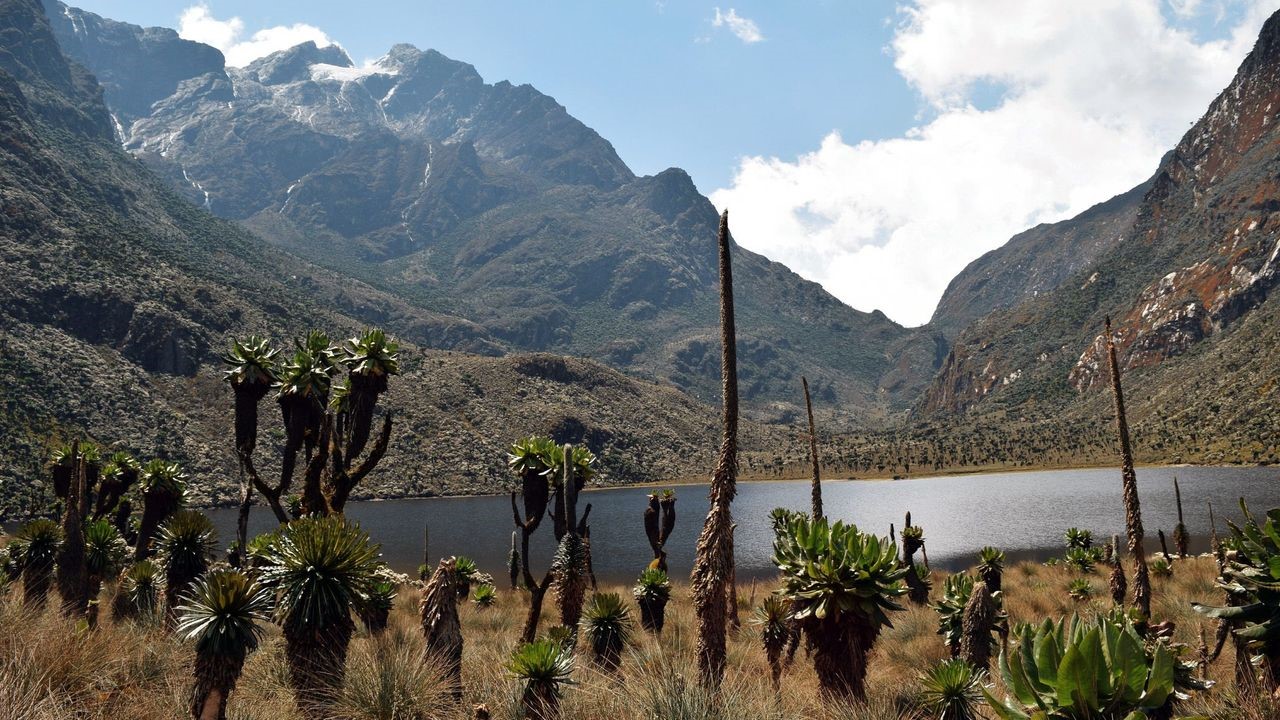
Hannie ensures it commits to environmental standards that protect the local ecosystem, watershed protection through waste and water management. Hannie supports local biodiversity through buffer zones between fields and ecologically sensitive areas and is prohibited from cutting down primary forest for cultivation.
Gender inequality
An estimated 60-80% of the world’s food is produced by women. Yet gender inequality remains prevalent in farming communities around the world and stands in the way of human progress around the world. This “gender gap” is particularly pronounced in agriculture, where women farmers have less access than their male counterparts to resources like land, information, credit, training and supplies.
Export crops – like cocoa and coffee – make up the majority of Fairtrade products. Those industries tend to be male dominated, with only 25% of Fairtrade’s members being women. However, Fairtrade still impacts the lives of members’ female relatives who often contribute equally to the production of commodities, though their work is seldom recognized or rewarded.
Hannie chocolate recognizes that gender is one of many factors that influences power dynamics, as part of an intersectional web of race, class, identity or ability. Social issues present in value chains can vary culturally and regionally, making it vital that gender interventions work within the context of the communities where we operate. Thus, Hannie’s gender strategy w support cocoa farmers to tackle unequal power relationships, by strengthening women and girls’ human, social, financial and physical capital and to rebalance power structures between persons of different genders.
- Fighting child labour
Hannie chocolate fight child labour in cocoa farms. Any farmer found using child labor in his or her garden, Hannie chocolate stops buying his cocoa and we de register the farmer.
What Hannie chocolate can guarantee is that if it finds violations of child labor requirements Hannie chocolate will act to protect the impacted child. By collaborating with national labor protection bodies, Hannie chocolate will ensure immediate remediation and long-term wellbeing for the child.
Hannie chocolate strongly condemn the use of child labour on cocoa farms
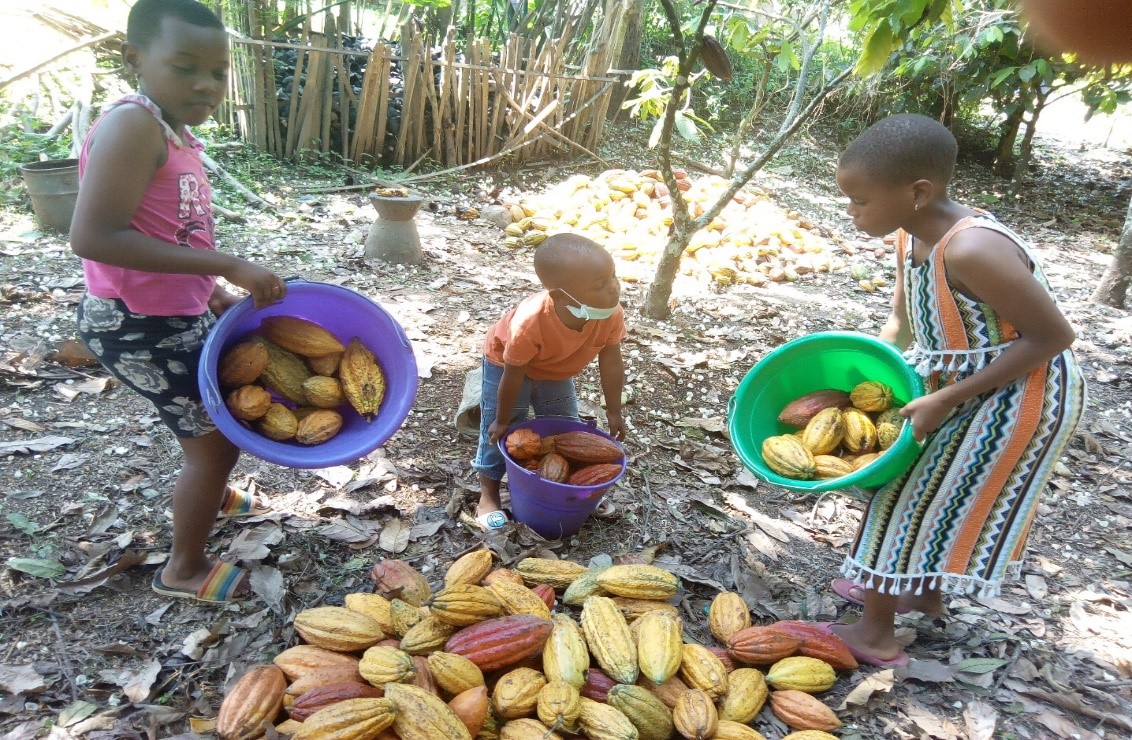
Children carrying cocoa pods in a cocoa garden this act is prohibited by Hannie chocolate